
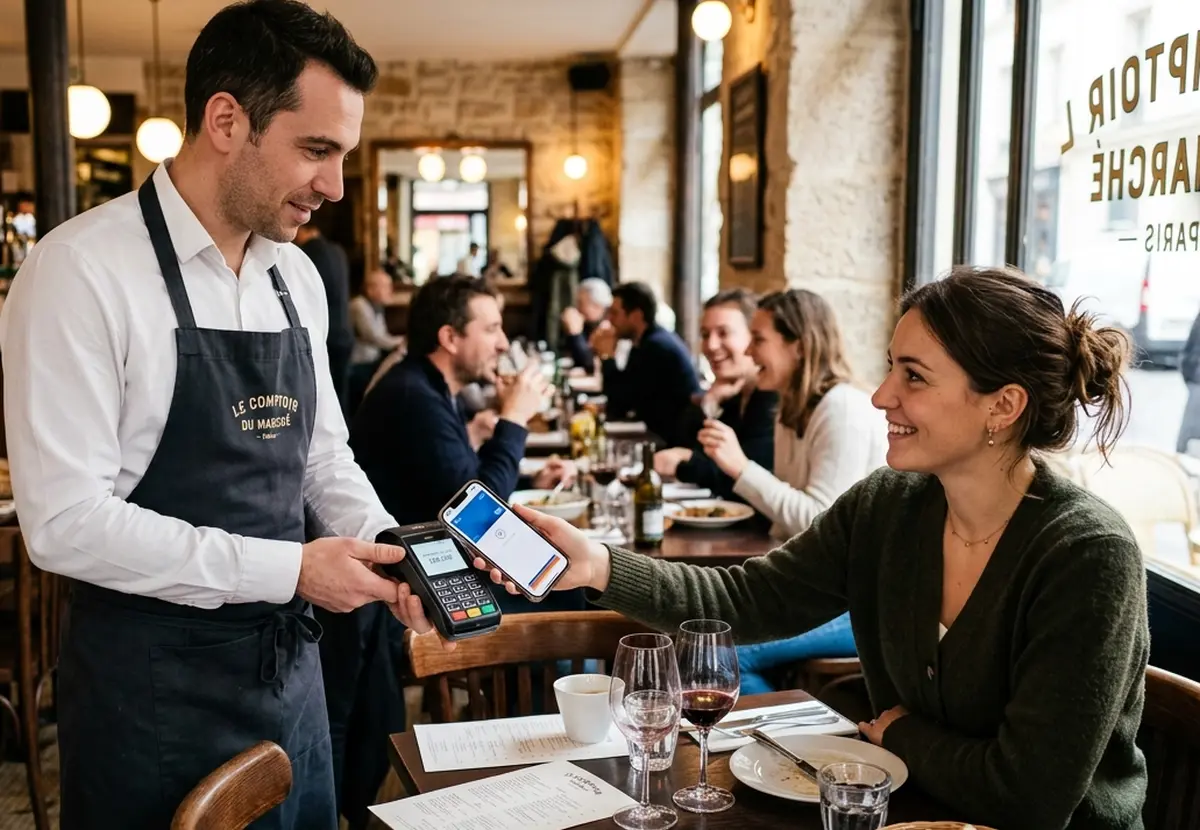
Travelers often notice big differences in how people handle gratuities when moving between european nations. What feels normal in one place can seem out of place in another because base wages for service staff vary and local habits have developed over time. Knowing these patterns lets visitors show genuine appreciation for good service without overspending or creating awkward situations at the table or hotel desk. Cash remains the most reliable way to deliver a tip directly to the person who earned it in most spots.
General practices that apply across most of europe
Service staff across the continent usually receive steady wages that already cover their work, so extra money functions more as a small thank-you than a required part of income. Bills frequently list a service charge already built in, especially for larger groups. When no charge appears, people commonly round the total upward to the next convenient euro amount rather than calculating exact percentages. Handing the tip directly to the server in cash works better than leaving coins on the table in many locations. Quality of service still guides the size of any extra amount given.
- Check the bottom of every bill for words like service compris, servizio incluso or servicio incluido before adding anything extra
- Round the total to the next whole number for everyday meals and small errands
- Deliver cash tips straight to the person who served you rather than leaving them behind
- Base any extra on how attentive or helpful the experience felt instead of a fixed percentage
- Skip tips entirely at counter service spots or when the experience fell short
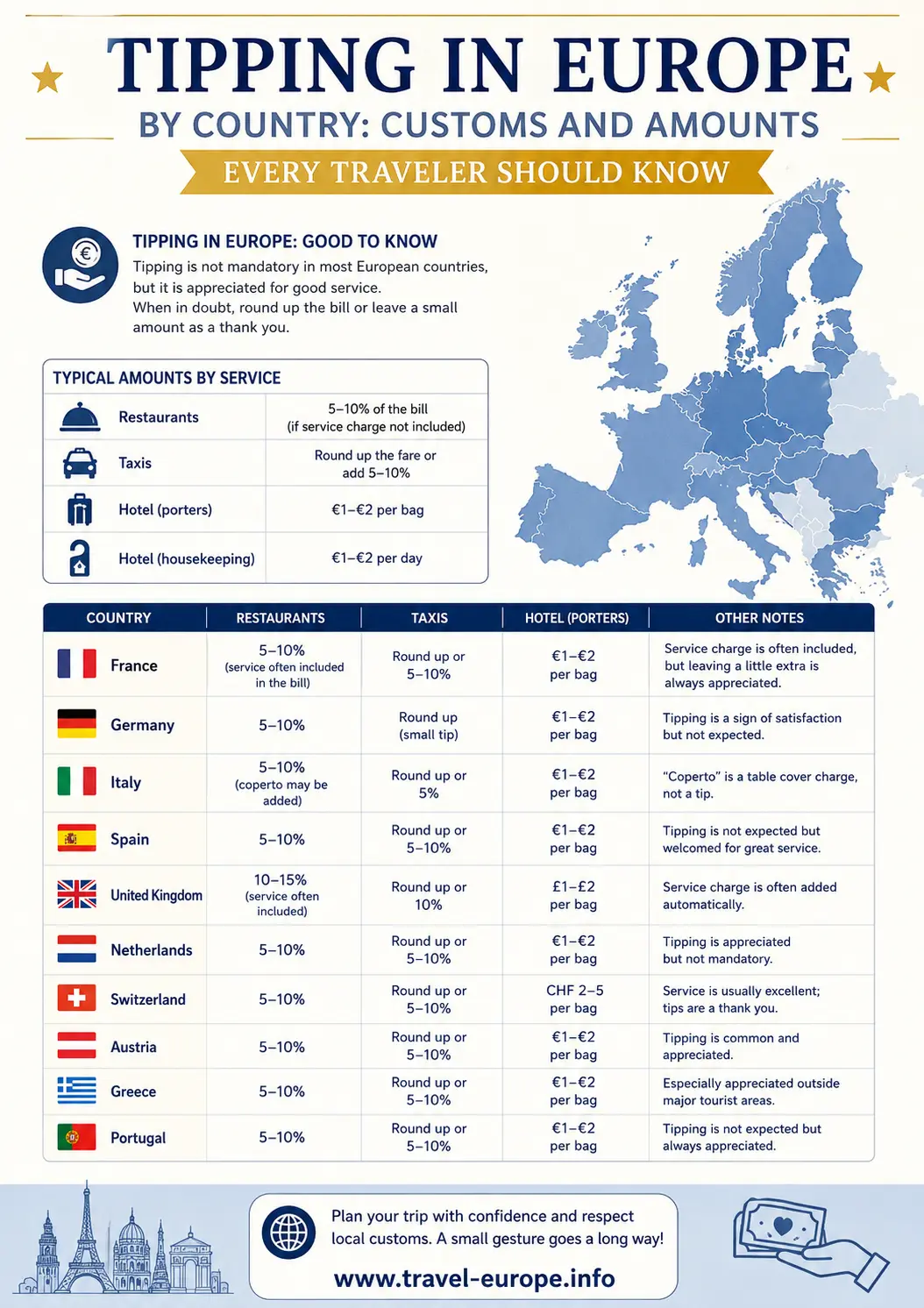
Tipping customs in western europe
France
Many restaurants print service compris on the bill, which already covers staff pay at around fifteen percent. When that line is missing, rounding up by a euro or two or adding up to ten percent for truly standout attention remains common. Servers prefer cash handed over when settling the bill rather than added to a card payment. At cafes and brasseries the same light touch applies, while hotel porters receive one or two euros per bag and housekeeping staff appreciate a small daily envelope left in the room at the end of a stay.
Italy
Italian restaurants often include a servizio charge or a coperto cover fee that pays for table setup and basic service. Extra money beyond that stays modest, usually just rounding the bill or leaving one or two euros per person for pleasant attention. The coperto amount does not go straight to waitstaff, so a separate small cash gesture shows thanks when deserved. Taxi drivers receive the change rounded upward on short rides, and hotel staff follow similar small-cash patterns as in neighboring countries.
Spain
Spanish diners rarely face pressure to tip large sums. Rounding the bill upward or leaving a euro or two per person for good table service covers most situations, with slightly higher amounts only in upscale spots. Bars and casual eateries often see just the change left behind. Hotel porters and housekeeping staff receive modest daily or per-bag amounts in cash, while taxi fares simply get rounded to the next euro without extra calculation.
Germany
German servers expect a polite rounding of the bill or five to ten percent for solid service. The common method involves handing over paper money and stating the exact total wanted, such as saying eleven euros for a ten-euro meal to leave one euro behind. This approach keeps the process quick and personal. The same rounding habit carries over to taxis and smaller services, while hotel staff receive one or two euros per bag or per day for housekeeping.
United kingdom
Many london and larger-city restaurants add a service charge of around twelve point five percent, especially for groups. When no charge shows, rounding up or adding up to ten percent works well. Pubs follow a different pattern where buying the bartender a drink serves as the usual gesture instead of cash left on the bar. Hotel porters and housekeeping staff receive small cash tips similar to continental neighbors, and taxi drivers appreciate the fare rounded upward on most rides.
Tipping customs in southern europe
Greece
Service charges appear on many greek restaurant bills, particularly at busy tourist spots. When absent, five to ten percent or simple rounding provides a suitable thank-you. Higher bills sometimes receive proportionally smaller extra amounts. Taxi drivers receive rounded change, and hotel staff follow the standard small daily cash pattern for porters and room cleaners.
Portugal
Portuguese restaurants welcome light rounding or a euro or two per person when service stands out. No strong expectation exists for larger sums. The same relaxed approach applies to bars and casual meals. Hotel and taxi gratuities stay modest and cash-based, matching patterns seen in neighboring spain.
Tipping customs in northern and central europe
Scandinavia
Denmark, norway, sweden, finland and iceland build service costs directly into prices by law or custom. Extra money stays rare and only appears for truly exceptional help. Rounding the bill upward occasionally happens but never feels required. Hotel staff and taxi drivers receive almost no additional cash in these nations because wages already reflect full compensation.
Austria
Austrian habits mirror nearby germany with five to ten percent or straightforward rounding at restaurants. Servers appreciate the direct hand-over method when paying. Taxis follow the same rounding rule, and hotel porters plus housekeeping staff receive the familiar one or two euros per bag or day in cash.
Quick reference table for tipping in europe by country
| Country | Restaurant | Hotel and taxi notes |
|---|---|---|
| France | Round up or 5-10% when service not included | 1-2 euros per bag or day; round taxi fares |
| Italy | Round up or 1-2 euros per person | Small daily cash for housekeeping; round taxi change |
| Spain | Round up or small euros for good service | Modest daily cash; round taxi fares |
| Germany | 5-10% or round up and state total | 1-2 euros per bag or day; round taxi fares |
| United kingdom | Check service charge then round up to 10% | Small cash for porters and housekeeping; round taxis |
| Greece | Round up or 5-10% | Small daily cash; round taxi fares |
| Portugal | Round up or 1-2 euros per person | Modest daily cash; round taxi fares |
| Austria | 5-10% or round up | 1-2 euros per bag or day; round taxi fares |
| Scandinavia | Rarely needed, round only for exceptional service | Almost never for hotels or taxis |
Tipping for hotels, taxis and tour guides
Hotel porters across most nations receive one or two euros or equivalent per bag carried. Housekeeping staff appreciate a small envelope with a few euros left daily or at checkout. Taxi drivers almost everywhere accept the fare rounded upward to the next convenient number rather than a calculated percentage. Private or group tour guides receive separate daily amounts that vary by length and group size, commonly twenty-five to forty euros per day for a full-day guide in western countries and slightly less in northern regions. Drivers on longer tours receive ten to fifteen euros daily in many places. These amounts stay modest because the base tour price already covers most costs.
Handling payments and tourist-area situations
Card payments sometimes allow tip addition at the terminal, yet cash handed directly still reaches staff faster in many restaurants and hotels. Tourist-heavy zones may see slightly higher expectations than quiet local spots, so watching what nearby diners do provides quick guidance. When service feels average or below, skipping any extra amount stays perfectly acceptable everywhere. Currency conversion apps help calculate quick round-ups when moving between countries with different coins and notes. Asking a local acquaintance or hotel front desk for a quick reminder on current habits clears up any last-minute questions without relying on server input.
These patterns have stayed steady for years because they match local wage structures and dining culture. Following them keeps interactions smooth and respectful during any trip through the continent.